
 Generate for Free
 Adobe PDF
 Microsoft Word
 OpenDocument
 Generate for Free
 Generate for Free
 Adobe PDF
 Microsoft Word
 OpenDocument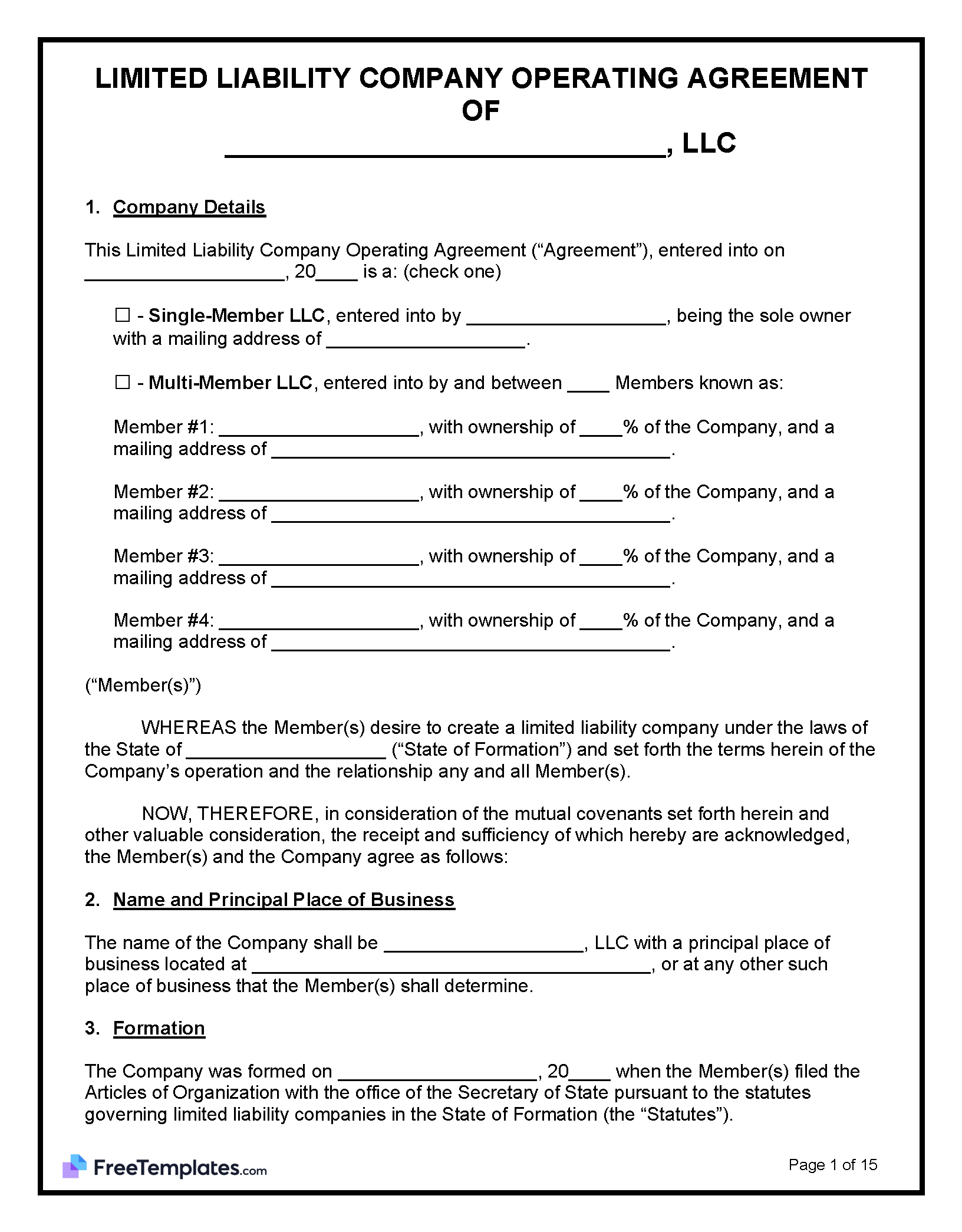
By State
- Alabama
- Alaska
- Arizona
- Arkansas
- California
- Colorado
- Connecticut
- Delaware
- Florida
- Georgia
- Hawaii
- Idaho
- Illinois
- Indiana
- Iowa
- Kansas
- Kentucky
- Louisiana
- Maine
- Maryland
- Massachusetts
- Michigan
- Minnesota
- Mississippi
- Missouri
- Montana
- Nebraska
- Nevada
- New Hampshire
- New Jersey
- New Mexico
- New York
- North Carolina
- North Dakota
- Ohio
- Oklahoma
- Oregon
- Pennsylvania
- Rhode Island
- South Carolina
- South Dakota
- Tennessee
- Texas
- Utah
- Vermont
- Virginia
- Washington
- Washington D.C.
- West Virginia
- Wisconsin
- Wyoming
By Type
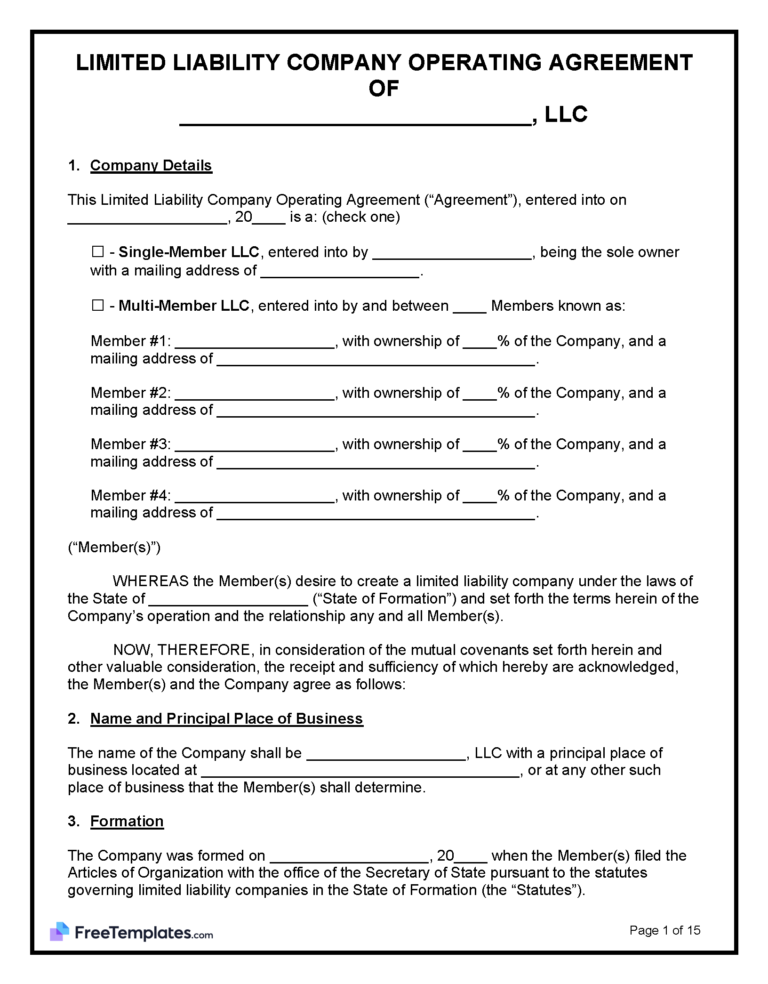
Single-Member LLC Operating Agreement – For an LLC with one member.
Multi-Member LLC Operating Agreement – For an LLC with more than one member.
What Should be Included (7 items)
Frequently Asked Questions (FAQs)
Does it need to be notarized?
No, obtaining a member’s signature (physically or digitally) constitutes a legally-binding document.
Do all members need to sign?
It is highly recommended that all members sign, but it is not required.
However, if there are obligations to members, such as non-compete provisions or restrictive covenants, it is recommended that all members authorize the operating agreement.
Does an agreement protect against personal liability?
Yes, but with conditions. If a creditor argues that an LLC is being run no differently from a personal asset, the creditor will check to ensure the members are honoring the terms of the operating agreement.
If the members are running the company in the exact manner outlined, the operating agreement helps protect them and shield their personal assets from liability.
Does it include ownership interest?
Yes, an operating agreement is the primary place where ownership is recorded for the entity. There is no government agency that records this, and it is usually confirmed in the member’s K-1 filing with the IRS.
Does the company need to run in accordance with an operating agreement?
Yes, it must run in accordance with the operating agreement to allocate liability among members and to limit exposure to third parties claiming the LLC is not a separate entity from personal assets.
Does it need to be filed anywhere?