

 Generate for Free
 Adobe PDF
 Microsoft Word

 Generate for Free
 Generate for Free
 Adobe PDF
 Microsoft Word
State Laws
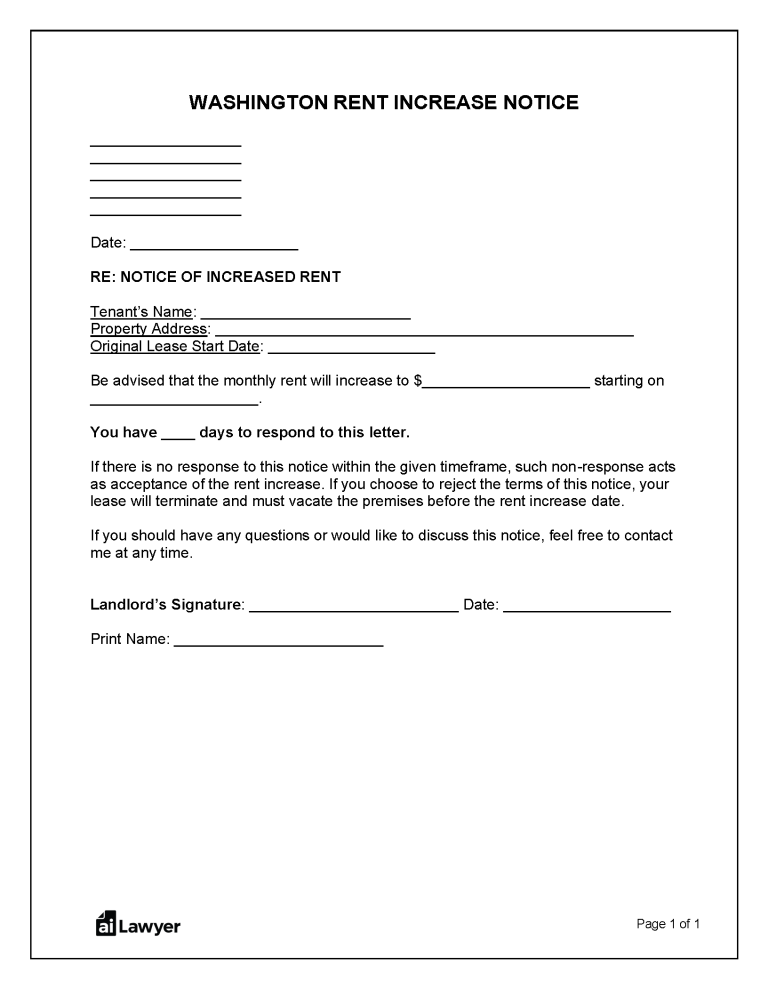
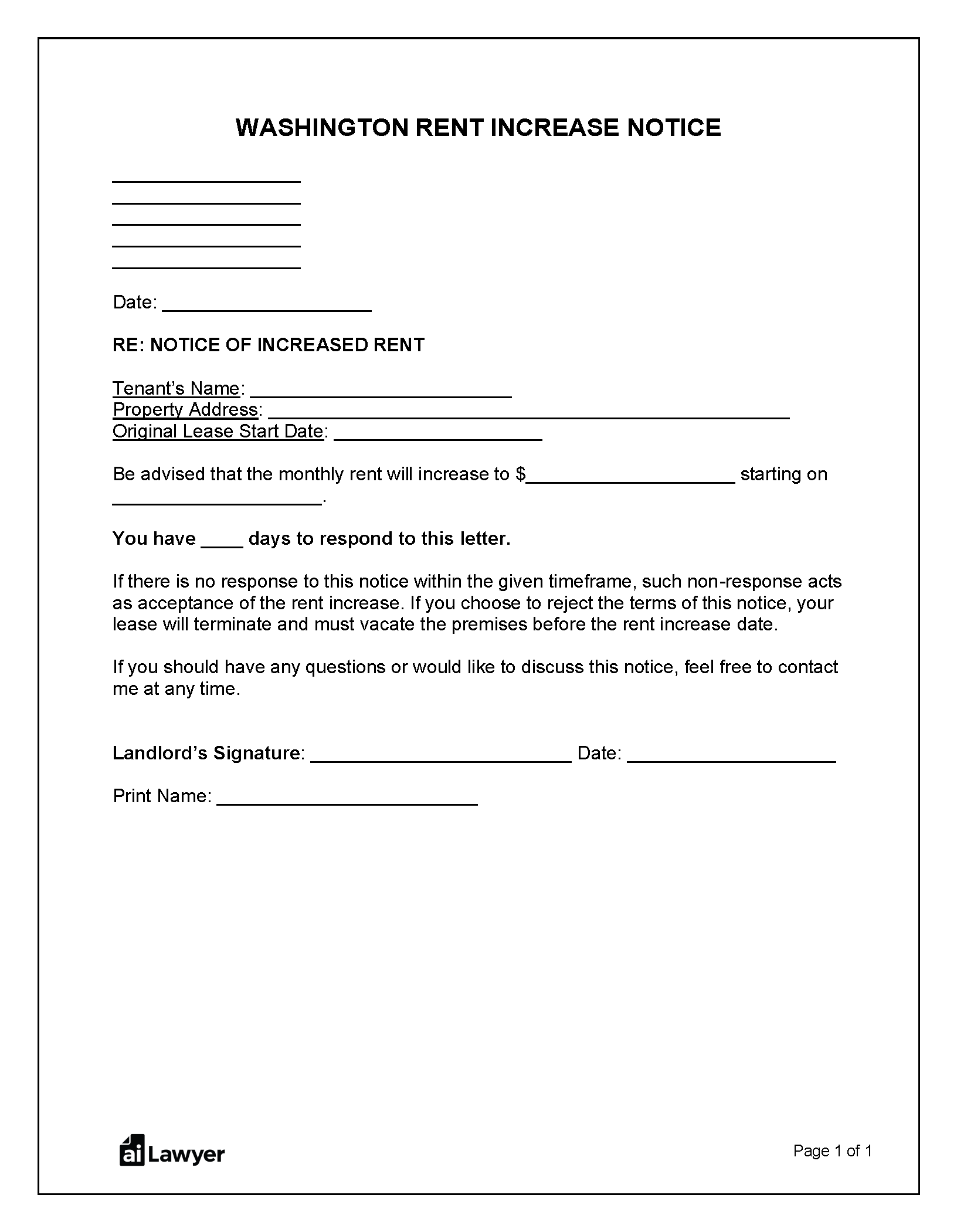
State Cap: Statewide, Washington limits annual rent increases to 7% plus the Consumer Price Index (CPI) or 10%, whichever is less, in any 12-month period, and bans any rent increase during the first 12 months of a tenancy (RCW 59.18.700). Certain properties, such as new construction built within the last 12 years, are exempt from the state cap (RCW 59.18.710).
Notice Period: Statewide, landlords must provide at least 90 days‘ advance written notice before a rent increase takes effect, and rent cannot be raised mid-lease on a fixed-term contract (RCW 59.18.140(3)). Locally in Seattle, city ordinance requires at least 180 days‘ advance written notice for any rent increase (SMC 7.24.030).
Proof of Service: Notice must be delivered in writing (RCW 59.18.140). Legal service across Washington is established by handing notice directly to the tenant, leaving a copy with a person of suitable age and mailing a copy, or posting it conspicuously on the property and mailing a copy; if notice is served by mail, 5 additional days must be added before the notice period begins (RCW 59.12.040).
Prohibited Acts: Landlords cannot raise rent as retaliation against a tenant for reporting code violations, requesting repairs, or joining a tenant organization (RCW 59.18.240; RCW 59.18.250). Rent increases are also illegal if done for discriminatory reasons or based on a tenant’s legal source of income under state fair housing laws (RCW 49.60.222; RCW 59.18.255).