

 Generate for Free
 Adobe PDF
 Microsoft Word

 Generate for Free
 Generate for Free
 Adobe PDF
 Microsoft Word
State Laws
District Cap: For rent-controlled properties, annual rent increases are capped based on the Consumer Price Index (CPI) plus 2%, with lower limits for elderly or disabled tenants (D.C. Code § 42-3502.08). Exempt properties, such as buildings constructed after 1975 or units owned by individuals who own four or fewer units (D.C. Code § 42-3502.05), have no cap. However, landlords of all residential units are prohibited from raising rent more than once in any 12-month period (D.C. Code § 42-3502.08(g)).
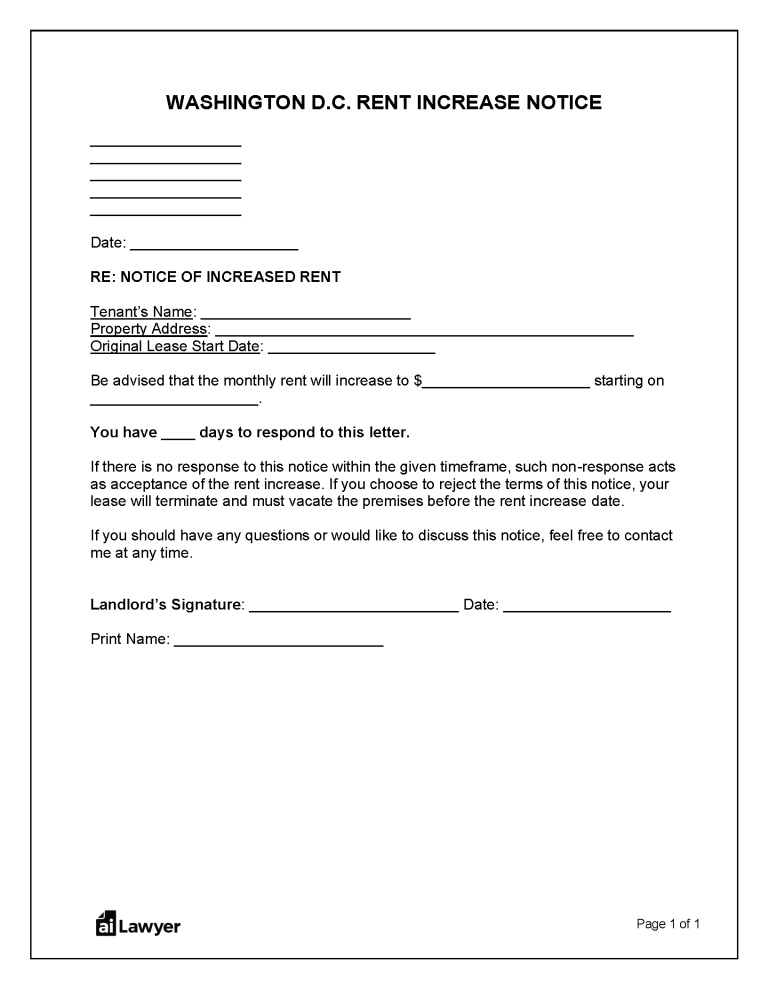
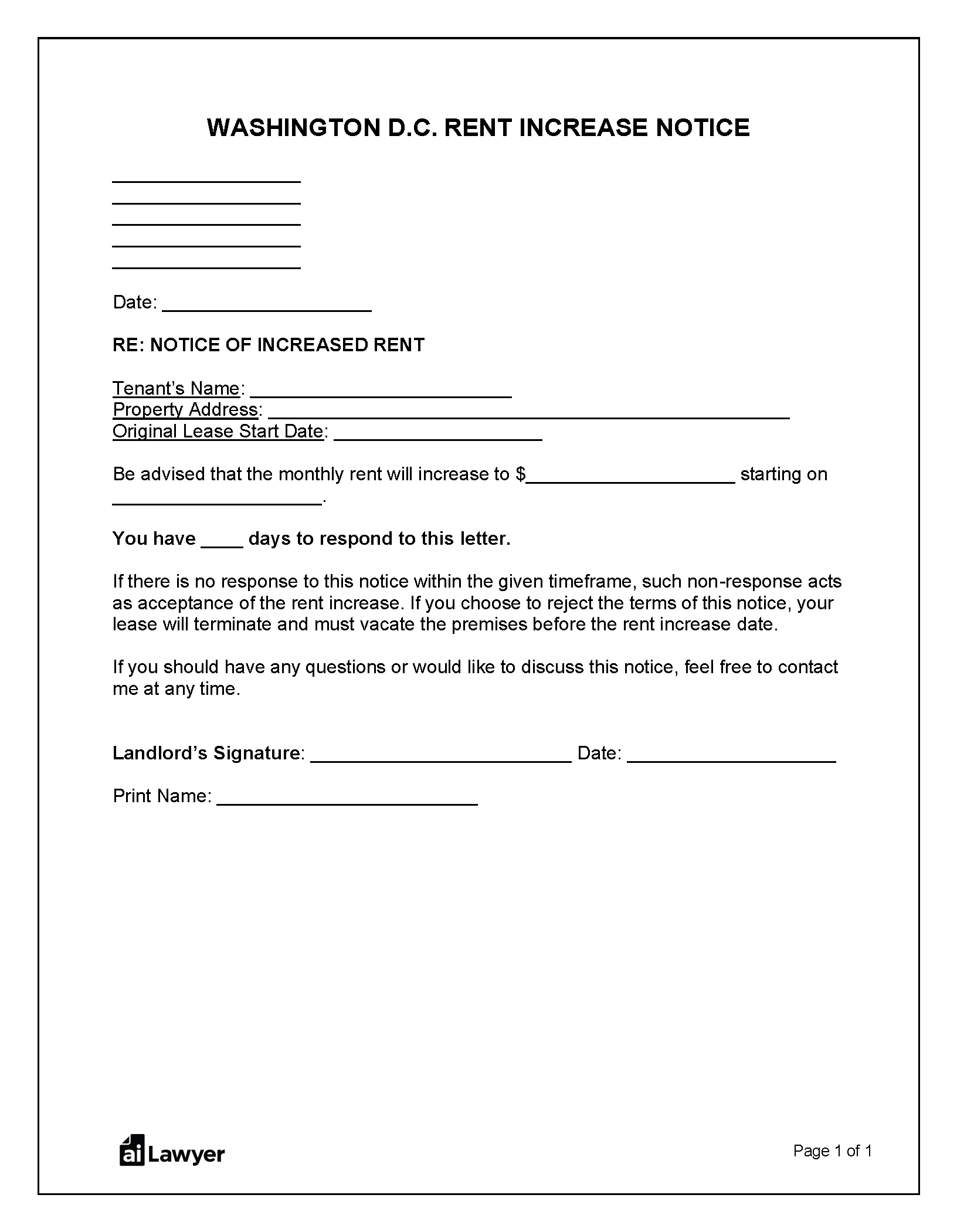
Notice Period: Landlords must provide at least 60 days‘ advance written notice before any rent increase can take effect for both rent-controlled and exempt units (D.C. Code § 42-3509.04). On fixed-term leases, landlords cannot increase rent prior to lease expiration unless explicitly allowed by the lease contract.
Proof of Service: Notice must be delivered in writing (D.C. Code § 42-3509.04). Legal service is established by personal hand delivery to the tenant, leaving a copy at the unit with a person of suitable age, or sending notice by mail (D.C. Code § 42-3509.04). Electronic delivery is also legally valid if the tenant agreed to digital notices in writing.
Prohibited Acts: Landlords cannot raise rent if the property has uncorrected housing code violations or if the landlord failed to properly register the unit with the Rental Accommodations Division (D.C. Code § 42-3502.08(a)). Landlords are also prohibited from raising rent in retaliation against a tenant for reporting code violations, filing a complaint, or joining a tenant organization (D.C. Code § 42-3505.02), or for discriminatory reasons under the D.C. Human Rights Act (D.C. Code § 2-1402.21).