

 Generate for Free
 Adobe PDF
 Microsoft Word

 Generate for Free
 Generate for Free
 Adobe PDF
 Microsoft Word
Are bylaws required in Virginia?
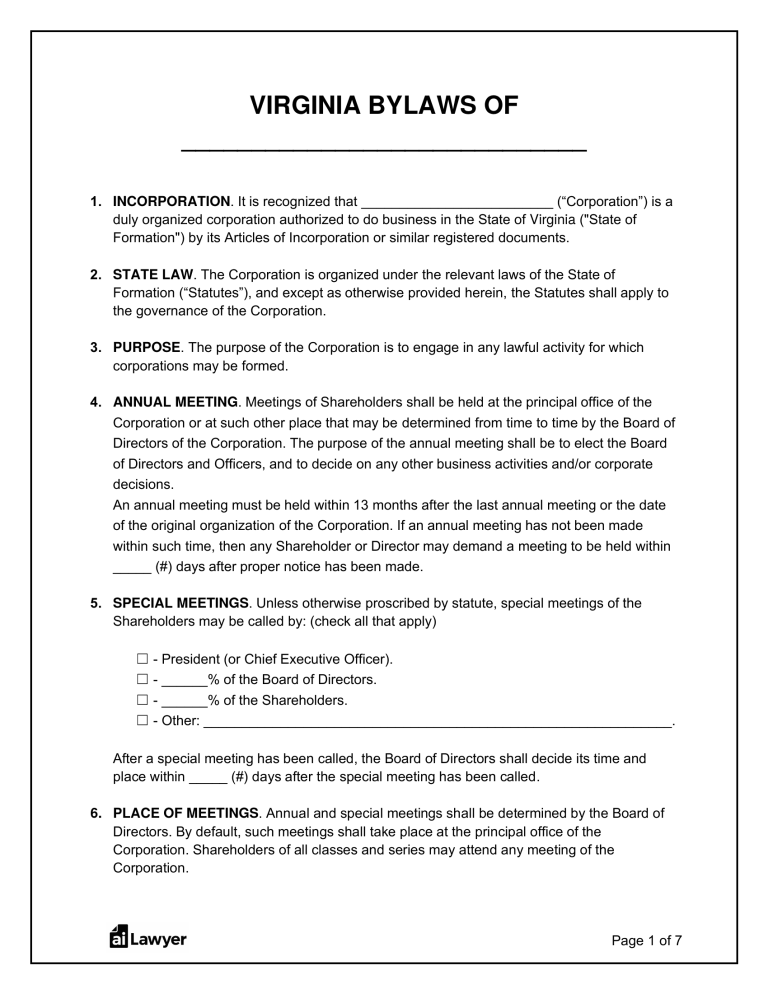
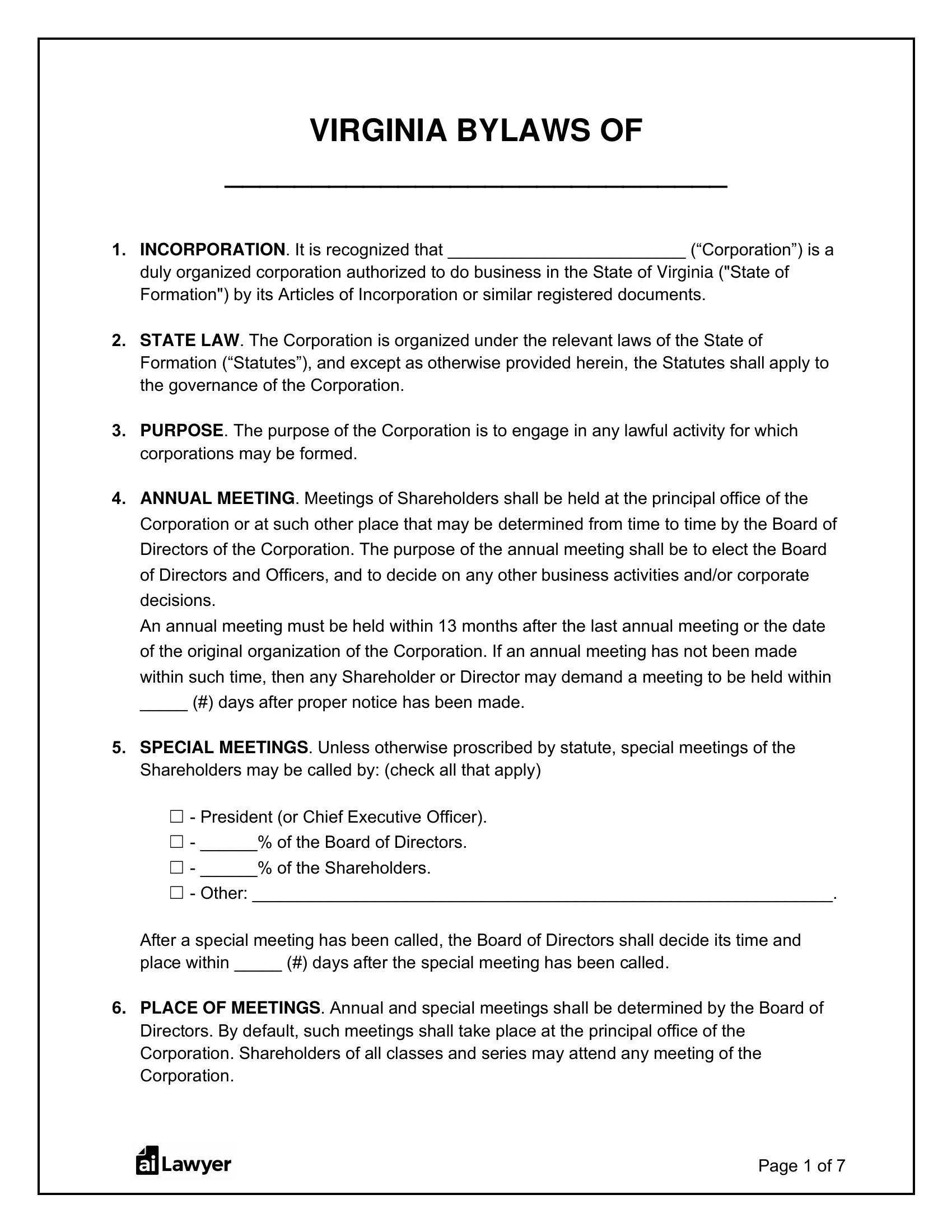
Yes, corporations in Virginia are explicitly required to operate as such with bylaws in place.[1]
Virginia Corporate Laws
- Corporate Tax: The corporate tax of 6% is explicitly imposed on corporations in Vermont.[2]
- Board: A corporation is “managed under the direction” of its board of directors in order to legally conduct business in Virginia. [3]
- Number – The number of directors on the board (at least one) may be set as well as adjusted “from time to time” through the bylaws.[4]
- Qualifications – The articles of incorporation or the bylaws set each “qualification for nomination for director” accordingly.[5]
- Terms – The initial directors’ term ends on the first annual meeting; however, during this initial meeting, director elections are held for a term until the next annual meeting “unless their terms are staggered.”[6]
- Staggered Terms – Directors divided into two or three equal groups can set a “term of two years or three years” accordingly. [7]
- Fiduciary Duty – The director exhibits “good faith business judgment” whenever acting for the corporation.[8]
- Officers: Corporate secretaries are responsible for the “minutes of the directors’ and shareholders’” meetings while the bylaws and the board of directors determine the remaining offices and officers.[9]
- Meetings: Notice for special meetings of the board of directors is issued to each director but “need not describe the purpose” unless the bylaws or articles require this.[10]
- Quorum: The bylaws, as well as the articles of incorporation can specifically name an exact number directors for a quorum whether the corporation has a fixed board size or variable-range size board, otherwise, the default is the majority of officers “in office” before the meeting.[11]
- Emergency Bylaws: Emergency bylaws come into play and stay in effect specifically during an emergency, and any corporate action taken while they are in effect is “taken in good faith.”[12]
Sample
Sources
- Code Of Virginia § 13.1-624
- Code Of Virginia § 58.1-400
- VA Code § 13.1-673 (2023)
- VA Code § 13.1-675 (2023)
- VA Code § 13.1-674 (2023)
- VA Code § 13.1-677 (2023)
- VA Code § 13.1-678 (2023)
- VA Code § 13.1-690 (2023)
- VA Code § 13.1-693 (2023)
- VA Code § 13.1-686 (2023)
- VA Code § 13.1-688 (2023)
- VA Code § 13.1-625 (2023)