

 Generate for Free
 Adobe PDF
 Microsoft Word

 Generate for Free
 Generate for Free
 Adobe PDF
 Microsoft Word
Signing Requirements
It must be signed with a notary public or other individual authorized by law to take acknowledgments to be considered genuine.
Source: § 26-1A-105
“Durable” Definition
“Durable,” with respect to a power of attorney, means not terminated by the principal’s incapacity.
Source: § 26-1A-102(2)
Powers Granted
- Real property as defined in Section 26-1A-204;
- Tangible personal property as defined in Section 26-1A-205;
- Stocks and bonds as defined in Section 26-1A-206;
- Commodities and options as defined in Section 26-1A-207;
- Banks and other financial institutions as defined in Section 26-1A-208;
- Operation of entity or business as defined in Section 26-1A-209;
- Insurance and annuities as defined in Section 26-1A-210;
- Estates, trusts, and other beneficial interests as defined in Section 26-1A-211;
- Claims and litigation as defined in Section 26-1A-212;
- Personal and family maintenance as defined in Section 26-1A-213;
- Benefits from governmental programs or civil or military service as defined in Section 26-1A-214;
- Retirement plans as defined in Section 26-1A-215;
- Taxes as defined in Section 26-1A-216; and
- Gifts as defined in Section 26-1A-217.
Source: § 26-1A-301
Termination
A power of attorney document terminates when:
- The principal dies;
- The principal revokes the power of attorney;
- The power of attorney document expires on a date or event;
- The agent dies, resigns, or becomes incapacitated, and there is no secondary agent to take over; or
- If revoked by a fiduciary appointed by a court.
Source: § 26-1A-110
Statutory Form
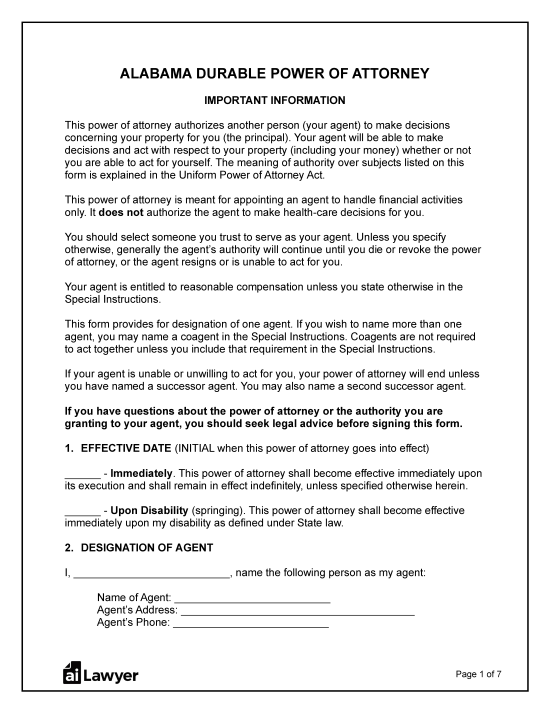
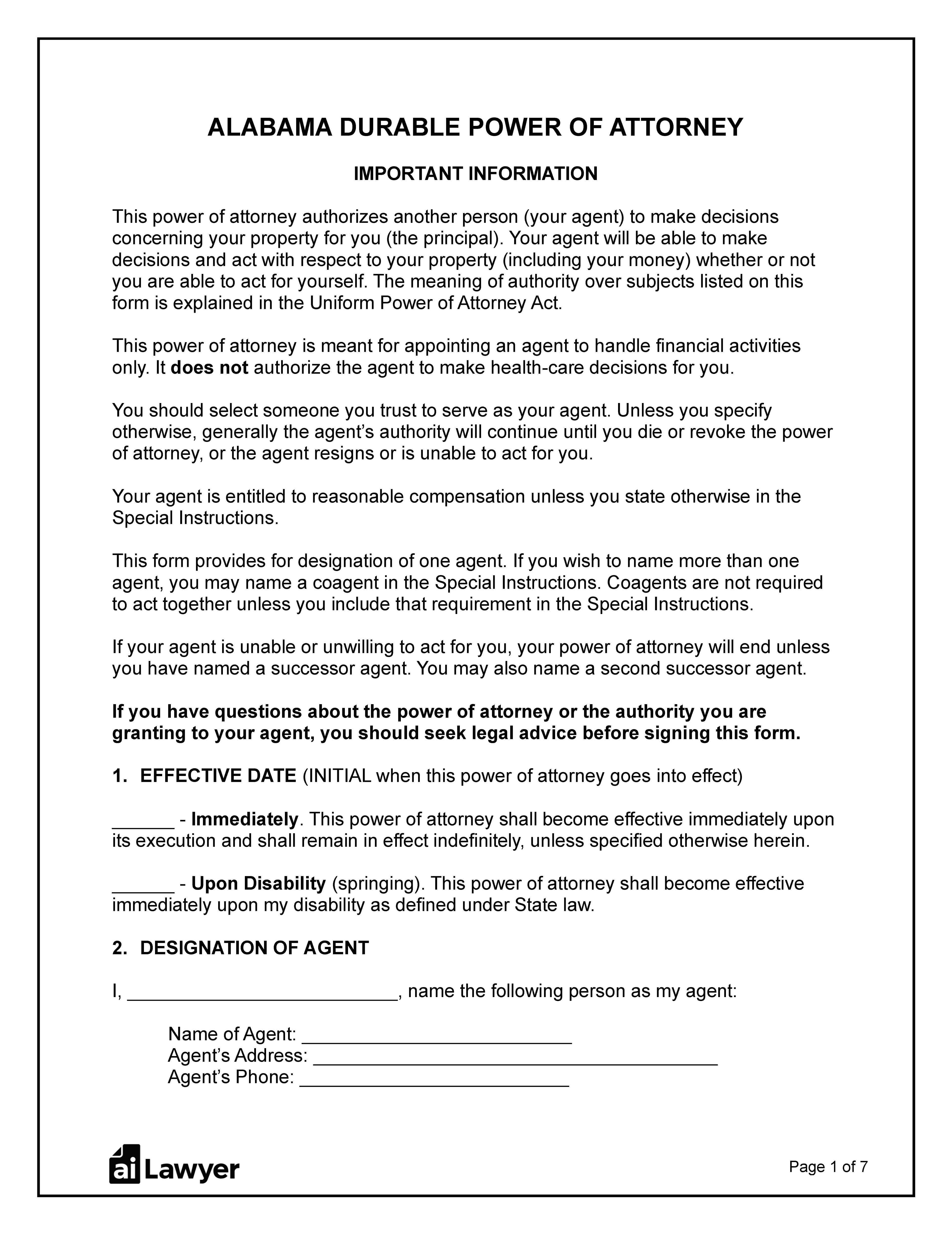
Yes, Alabama has a statutory form that is recommended for use.
Source: § 26-1A-301