

 Generate for Free
 Adobe PDF
 Microsoft Word

 Generate for Free
 Generate for Free
 Adobe PDF
 Microsoft Word
State Laws
State Cap: New York does not have a single flat cap on rent increases for all residential units, but rent adjustments are heavily regulated by specific statutory frameworks. Rent-stabilized and rent-controlled units are limited to annual percentage caps set by local Rent Guidelines Boards. For units covered by the New York State Good Cause Eviction Law (Article 6-A), rent increases above a certain benchmark are considered unreasonable unless a landlord can justify them in court (§ 211; § 231-c).
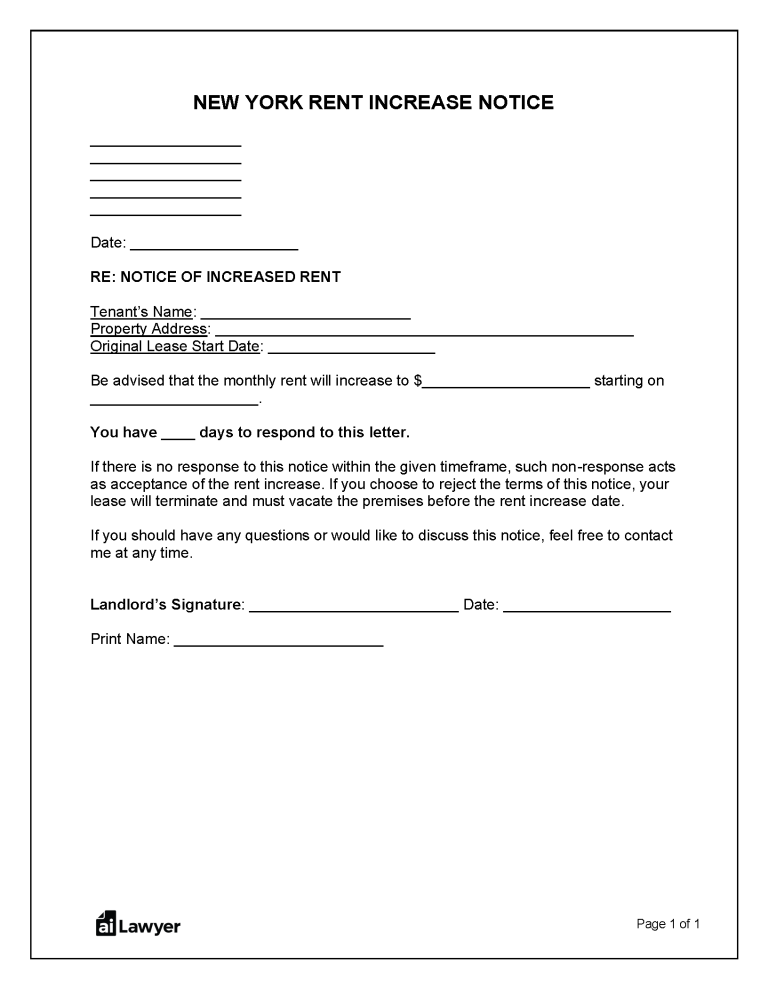
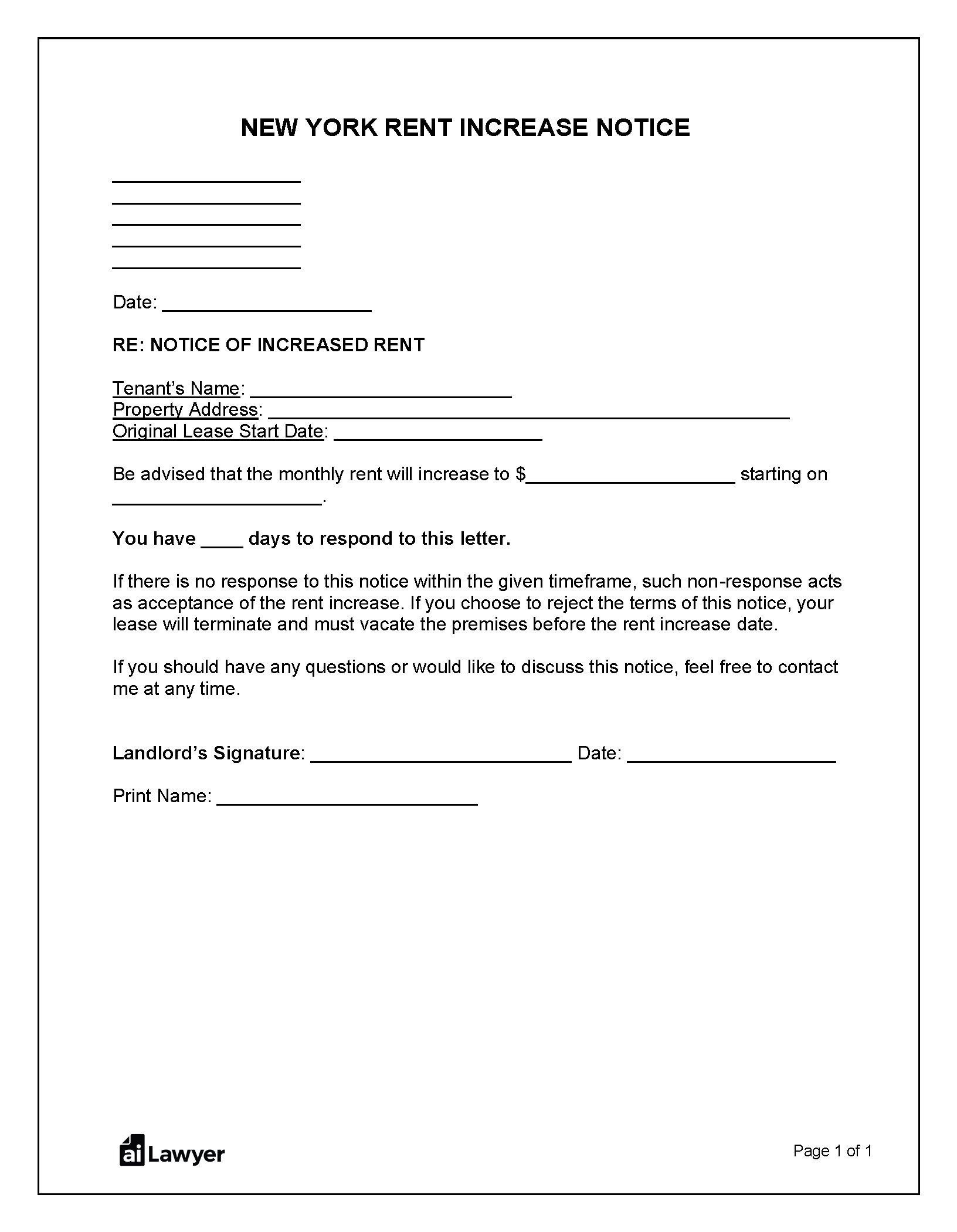
Notice Period: Landlords proposing a rent increase of 5% or more must provide advance written notice scaled to the tenant’s tenure or lease length (§ 226-c). If the tenant has occupied the residence for less than one year and has a lease term of less than one year, at least 30 days‘ advance written notice is required (§ 226-c(2)(b)). If the tenant has occupied the unit for at least one year but less than two years, or has a lease term of at least one year but less than two years, at least 60 days‘ advance written notice is required (§ 226-c(2)(c)). If the tenant has occupied the unit for more than two years or has a lease term of two years or more, at least 90 days‘ advance written notice is required (§ 226-c(2)(d)). If a landlord fails to provide enough notice, the tenancy continues under existing terms until the notice period fully expires (§ 226-c(1)(a)).
Proof of Service: Notice must be delivered in writing (§ 226-c). Proof of service is legally established through personal in-hand delivery to the tenant, by leaving a copy with a person of suitable age and discretion at the property combined with required mailings, or posting conspicuously at the residence combined with certified and regular mailings (RPAPL § 735).
Prohibited Acts: Landlords cannot increase rent as retaliation against tenants for submitting good-faith health or safety complaints, participating in tenant organizations, or exercising statutory rights (§ 223-b), or for discriminatory reasons under the New York State Human Rights Law (Executive Law § 296).