
Signing Requirements
Texas requires the principal’s signature, or that of another adult signing at the principal’s direction in their conscious presence, to be acknowledged before a notary public or another authorized officer.
Source: Estates Code § 751.0021(a), § 752.051, 7 TAC § 153.15(2)
“Durable” Definition
“This power of attorney is not affected by subsequent disability or incapacity of the principal”
Powers Granted
- Real property transactions;
- Tangible personal property transactions;
- Stock and bond transactions;
- Commodity and option transactions;
- Banking and other financial institution transactions;
- Business operating transactions;
- Insurance and annuity transactions;
- Estate, trust, and other beneficiary transactions;
- Claims and litigation;
- Personal and family maintenance;
- Benefits from social security, Medicare, Medicaid, or other governmental programs or civil or military service;
- Retirement plan transactions;
- Tax matters; and
- Digital assets and the content of an electronic communication.
Source: Estates Code § 752.051, § 752.052
Termination
A Texas durable power of attorney terminates in these situations:
- The principal dies;
- The principal revokes the power of attorney;
- An expiration date or another termination condition specified in the document occurs;
- The purpose of the power of attorney is accomplished;
- The agent’s authority is revoked, or the agent dies, resigns, becomes incapacitated, or is otherwise disqualified, without another agent authorized to act; or
- A permanent guardian of the principal’s estate qualifies to serve, subject to the court’s authority to suspend the agent’s powers instead.
Source: Tex. Est. Code § 751.131, Tex. Est. Code § 751.132, Tex. Est. Code § 751.133
Statutory Form
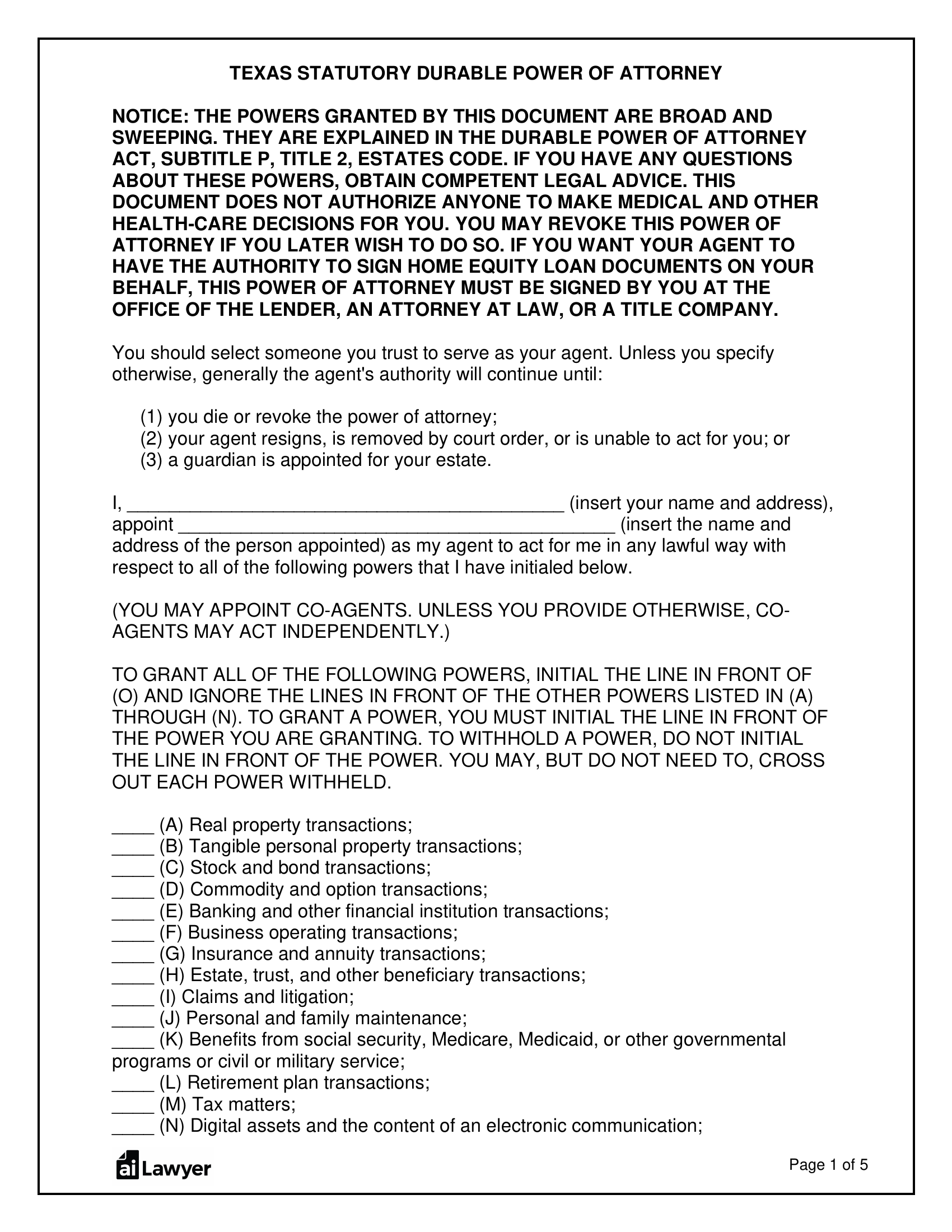
Yes, Texas includes a Statutory Durable Power of Attorney form.
Source: Estates Code § 752.051
Sample
Texas Durable (Statutory) Power of Attorney Form · sample
Open PDF
Texas Durable (Statutory) Power of Attorney Form
Free AI Generator